
Devrun
November 27, 2025
The November 2025 Google Analytics updates marks a critical shift in how organizations manage and activate marketing data across the MarTech stack. These updates introduce key enhancements to Campaign Data Import and User-Provided Data, designed to reduce data fragmentation, improve attribution accuracy, and enable real-time performance optimization.
In increasingly MarTech complex environments where data is siloed and privacy constraints limit visibility, these capabilities allow organizations to unify data and drive faster, more reliable decisions.
Campaign Data Import allows organizations to integrate external campaign data such as cost, clicks, and impressions into Google Analytics. This capability extends measurement beyond Google Ads and enables full cross-channel performance tracking across platforms like Meta, TikTok, and other paid media environments.

This is not just an integration feature, it is a structural upgrade
By centralizing campaign data, organizations eliminate reporting inconsistencies and gain a single source of truth for performance measurement. This enables accurate ROI and ROAS calculation across all channels and supports more effective budget allocation.
User-Provided Data allows organizations to leverage first-party data, such as hashed user identifiers, to enhance attribution models. In a privacy-first ecosystem where signal loss is increasing, this capability becomes essential.
It fills the gaps, it reconnects user journeys, and it strengthens measurement reliability. By enriching attribution models with first-party data, organizations can reduce data loss, improve audience matching, and gain a clearer understanding of conversion paths. This leads to more accurate performance evaluation and stronger optimization decisions.
This update reflects a fundamental shift from reporting to activation. Organizations are no longer looking for dashboards; they need systems that unify and activate data across their MarTech stack.
Campaign Data Import and User-Provided Data create a unified layer where campaign performance and user behavior can be analyzed together. The result is immediate: faster decisions, better targeting, and stronger alignment between marketing and revenue. In modern MarTech ecosystems, this level of integration is no longer optional; it is a competitive requirement.
To activate Campaign Data Import, organizations must align their data integration strategy with their MarTech architecture. External platforms must be connected, and campaign data must be imported consistently, including cost, clicks, and impression metrics. Mapping these dimensions to the Google Analytics schema ensures standardized reporting across channels.

Validation is critical. Without clean data, insights become unreliable. Once unified, organizations can measure true ROI across all channels, identify underperforming campaigns, and reallocate budgets with confidence. This enables continuous MarTech optimization and improved financial performance.
MarTech environments often struggle with fragmented data, weak attribution, and inconsistent reporting across platforms.
The Google Analytics November 2025 update directly addresses these challenges by enabling unified data activation and cross-channel performance visibility. The following table outlines how GA4 updates address core MarTech challenges.
This example shows how activating first-party data improves attribution accuracy in privacy-first environments. According to Google Analytics, first-party data activation helps reduce data loss and improve attribution accuracy in privacy-constrained environments. In privacy-constrained environments, organizations face increasing data loss across channels, limiting attribution accuracy and campaign visibility.
By activating User-Provided Data in Google Analytics, companies can recover missing conversion signals and reconnect fragmented user journeys across devices. This leads to more complete conversion paths and more reliable attribution models.
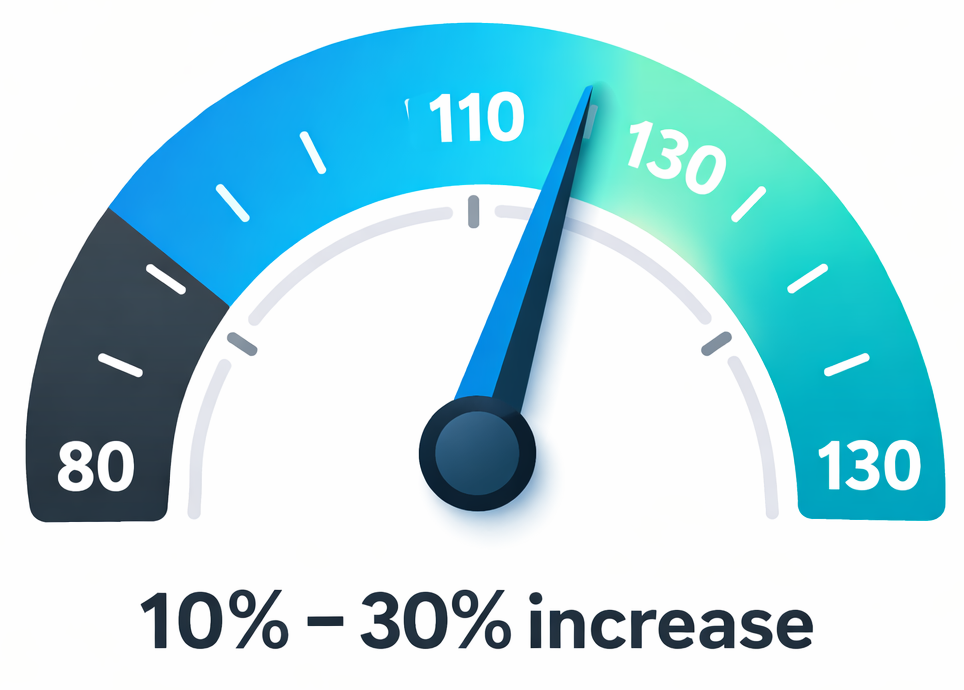
The impact is immediate. Organizations can improve attribution accuracy by 10% to 30%, depending on data quality and consent rates.
The following table outlines the performance impact of data activation across the MarTech stack. It demonstrates how improved attribution and unified data drive measurable business results.

Google Analytics is evolving into a central MarTech activation hub where data is not only measured but continuously activated. By combining first-party data with cross-channel campaign metrics, organizations move beyond static reporting and into real-time decision-making.
SEO and performance benefits of unified data
Unified data improves both paid and organic performance. Better attribution enables organizations to identify high-value traffic sources, optimize conversion paths, and align SEO and paid strategies through consistent measurement. This creates a more efficient MarTech ecosystem where every channel contributes to measurable growth.
The November 2025 Google Analytics update introduces a major evolution toward MarTech data activation through Campaign Data Import and User-Provided Data.
Organizations that adopt these capabilities can eliminate data silos, improve attribution accuracy, and unlock full cross-channel performance visibility. This enables faster decision-making, optimized budget allocation, and stronger business outcomes in complex digital analytics environments.

🔗 Sources:
Analytics Help
https://support.google.com/analytics/answer/9164320
Think with Google
https://www.thinkwithgoogle.com