
Every quarter, enterprise marketing teams invest hundreds of hours measuring marketing performance. Campaigns are analyzed, dashboards are refined, KPIs are validated, and reports are carefully prepared before reaching the boardroom. By the time the presentation begins, the Analytics team is confident every number has been thoroughly verified.
The meeting starts as expected. The Chief Marketing Officer presents another successful quarter: website engagement has increased, campaigns have exceeded expectations, and marketing-generated pipeline continues to grow. The story appears clear. Then someone asks a simple question.

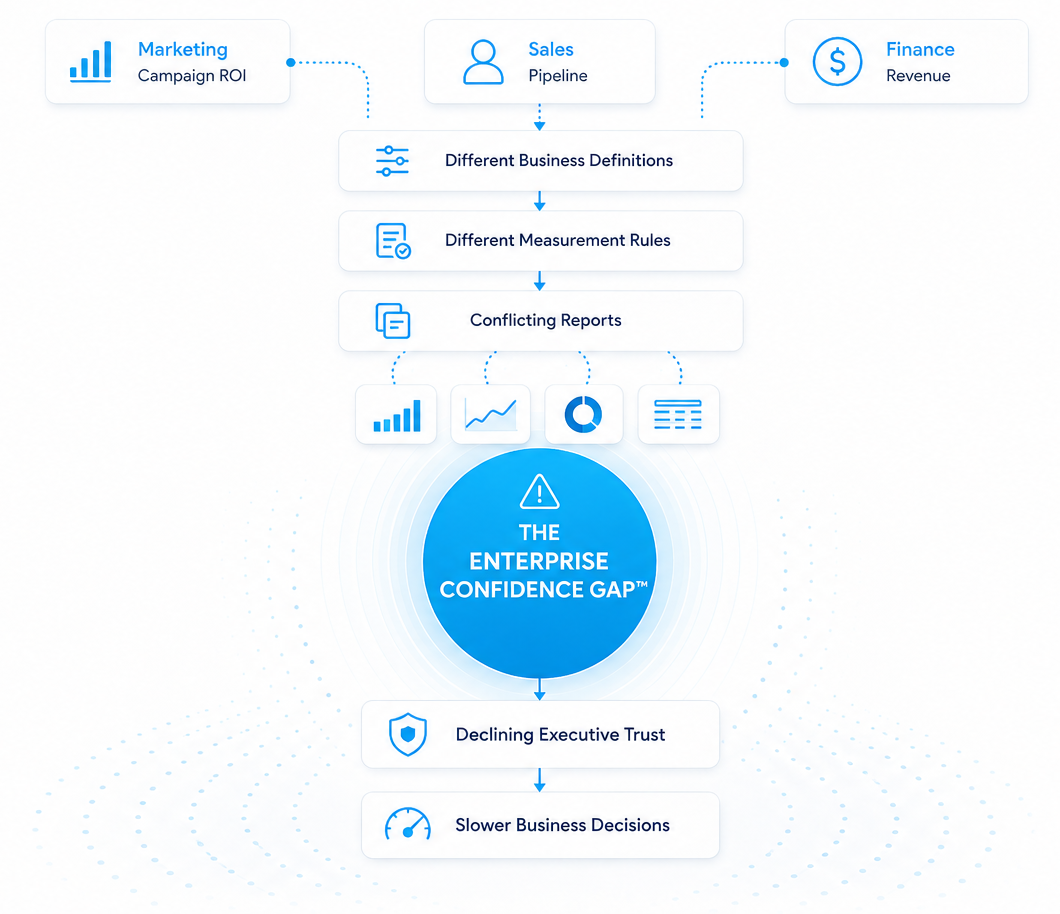
The room falls silent. Marketing, Sales, and Finance compare their dashboards, and the conversation quickly shifts from MarTech performance to which numbers leadership should trust. The issue is rarely inaccurate data; it’s that each department measures success differently, using valid but conflicting definitions.
Dashboards don't create alignment, they reveal the alignment, or misalignment, that already exists within the organization.
This is where organizations begin losing something far more valuable than reporting accuracy, trust. We call this The Enterprise Confidence Gap, the growing disconnect between the business performance an organization believes it is measuring and the performance it can confidently prove. It doesn't emerge because technology fails. It emerges when different teams answer the same business question using different definitions, processes, and data.
As the gap widens, analysts spend more time reconciling reports than generating MarTech insights, while business leaders spend more time questioning data than making decisions. The most surprising part? The problem rarely begins with Adobe Analytics, Google Analytics, Salesforce, or any other technology platform. It begins long before the first dashboard is ever built.
If dashboards are not the problem, what is? That question has guided every enterprise analytics assessment we've conducted. Contrary to popular belief, we don't begin by reviewing dashboards, validating tags, or opening Adobe Analytics. Those activities certainly matter, but they rarely explain why executive teams stop trusting marketing data.
Instead, we start with a series of business questions. The answers usually reveal far more than any dashboard ever could. The first question often surprises people.
"How many different definitions of a qualified lead exist across your organization?"
Yet nobody is measuring exactly the same thing. That conversation often explains why executive dashboards generate more debate than confidence. Before discussing attribution models, marketing campaign performance, or reporting tools, organizations must first agree on what success actually means. These challenges often appear as hidden analytics blind spots across reporting, attribution, data integration, and MarTech complexity.
For marketing leaders, this directly affects how campaign performance is evaluated, how budgets are allocated, and how confidently marketing can demonstrate its contribution to revenue.
Different definitions naturally produce different reports. Technology cannot standardize business language. Organizations must establish common governance before expecting common measurement. The second question is equally revealing.

Enterprise organizations rarely struggle because they lack data. In fact, they often collect more data than they can effectively govern. Adobe Analytics, CRM platforms, customer data platforms, business intelligence tools, and marketing automation systems each perform their intended role remarkably well.
The difficulty lies between those platforms. As organizations grow, campaign taxonomies evolve independently. Product naming conventions change. APIs multiply. New technologies are added while legacy implementations remain in place. Over time, complexity quietly replaces consistency. The result is not poor technology but is fragmented business intelligence. For marketing teams, this fragmentation can make it difficult to connect campaign activity, customer behavior, attribution, and revenue into one consistent view of MarTech performance.
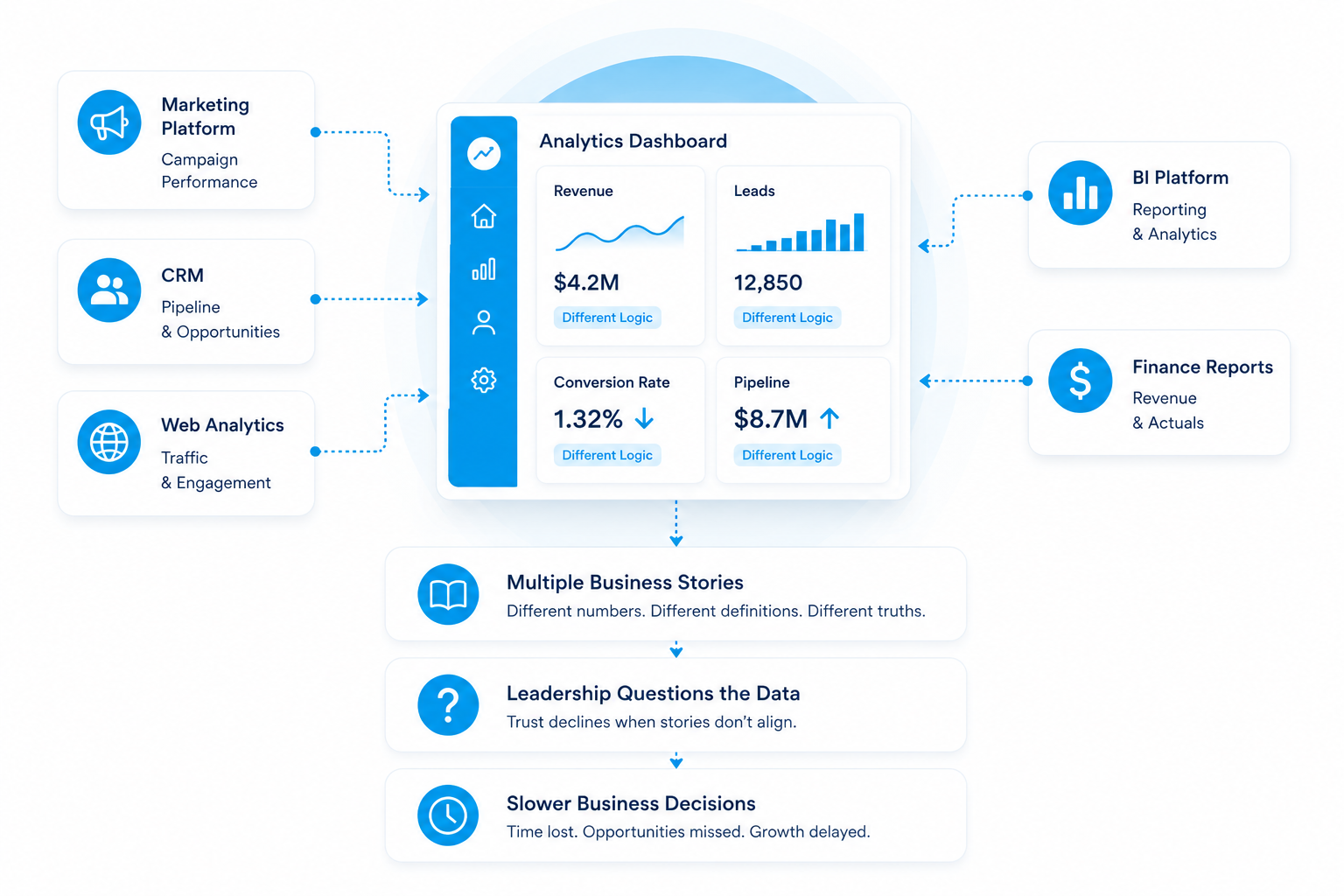
Organizations often attempt to solve this challenge by implementing additional technology. In reality, every new platform increases the need for stronger governance, clearer business definitions, and better integration. Complexity is rarely created by software itself. It is created by years of disconnected decisions that gradually reshape the analytics ecosystem.
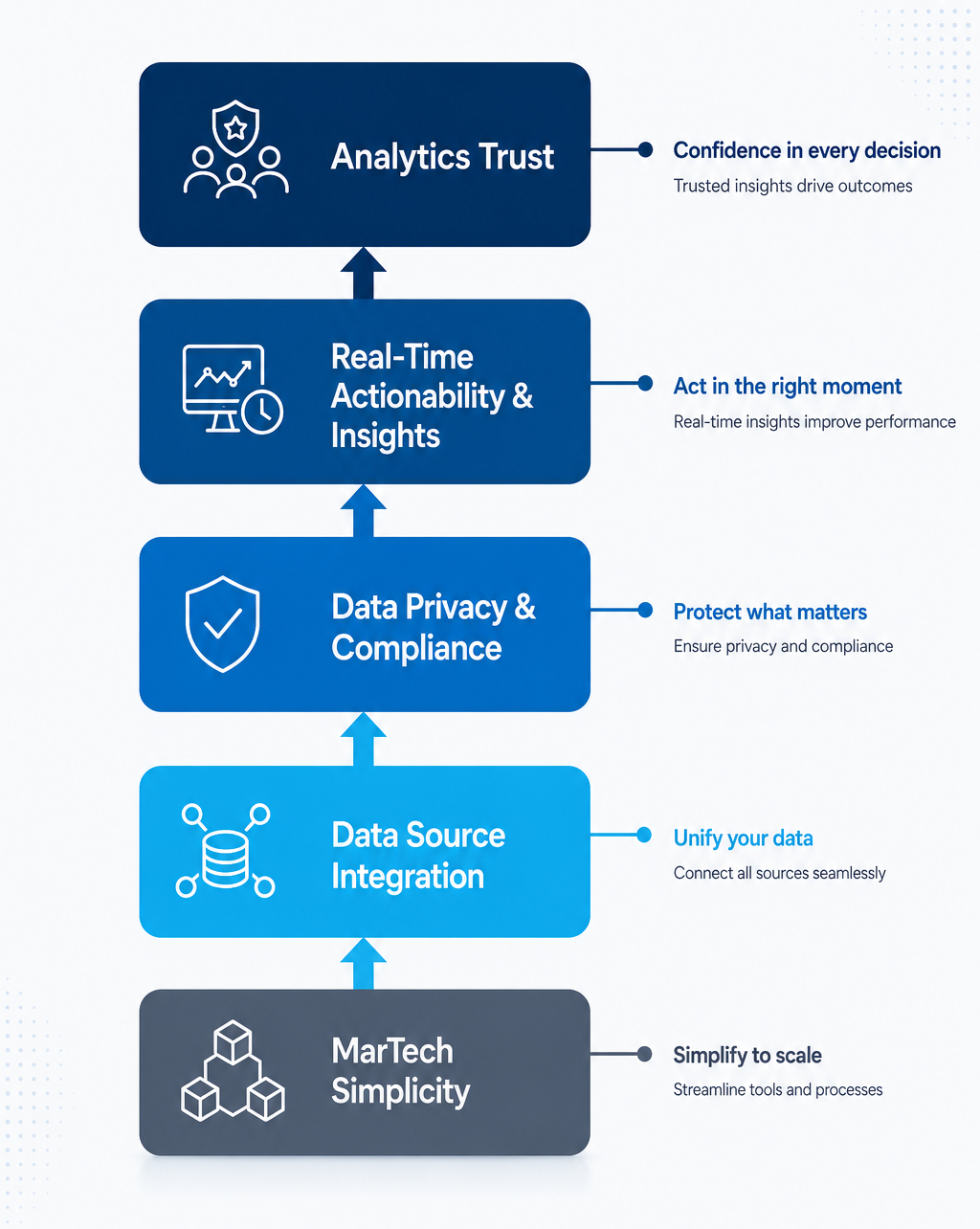
After evaluating enterprise organizations across multiple industries, we discovered that the companies earning the highest level of executive trust consistently shared the same four organizational capabilities. Those observations became the foundation of the Enterprise Analytics Maturity Framework, which we'll explore throughout the remainder of this assessment.
After evaluating enterprise analytics environments across organizations of different sizes and industries, one conclusion consistently emerged.
Organizations that earn executive trust don't necessarily own the most advanced technology. They consistently demonstrate four organizational capabilities:
These four capabilities became the foundation of the Enterprise Analytics Maturity Framework.
Rather than evaluating individual platforms, the framework measures the organizational capabilities that determine whether marketing analytics can support confident business and executive decision-making.
From Analytics Capabilities to Business Outcomes
The Enterprise Analytics Maturity Framework is intentionally business-first. While technology enables each capability, technology alone does not create trust. Organizations can implement world-class analytics platforms and still struggle to make confident business decisions if governance, data integration, and measurement standards are inconsistent. Ultimately, analytics maturity is not defined by the number of dashboards an organization owns, but by the confidence leaders have in the decisions those dashboards support.
Improving analytics maturity is not a one-time implementation project, it's an ongoing organizational capability. As technologies, customer expectations, and privacy requirements continue to evolve, organizations that regularly assess their analytics maturity are better positioned to identify hidden risks early, maintain executive confidence, and make faster, data-driven business decisions using a single, trusted version of the truth.
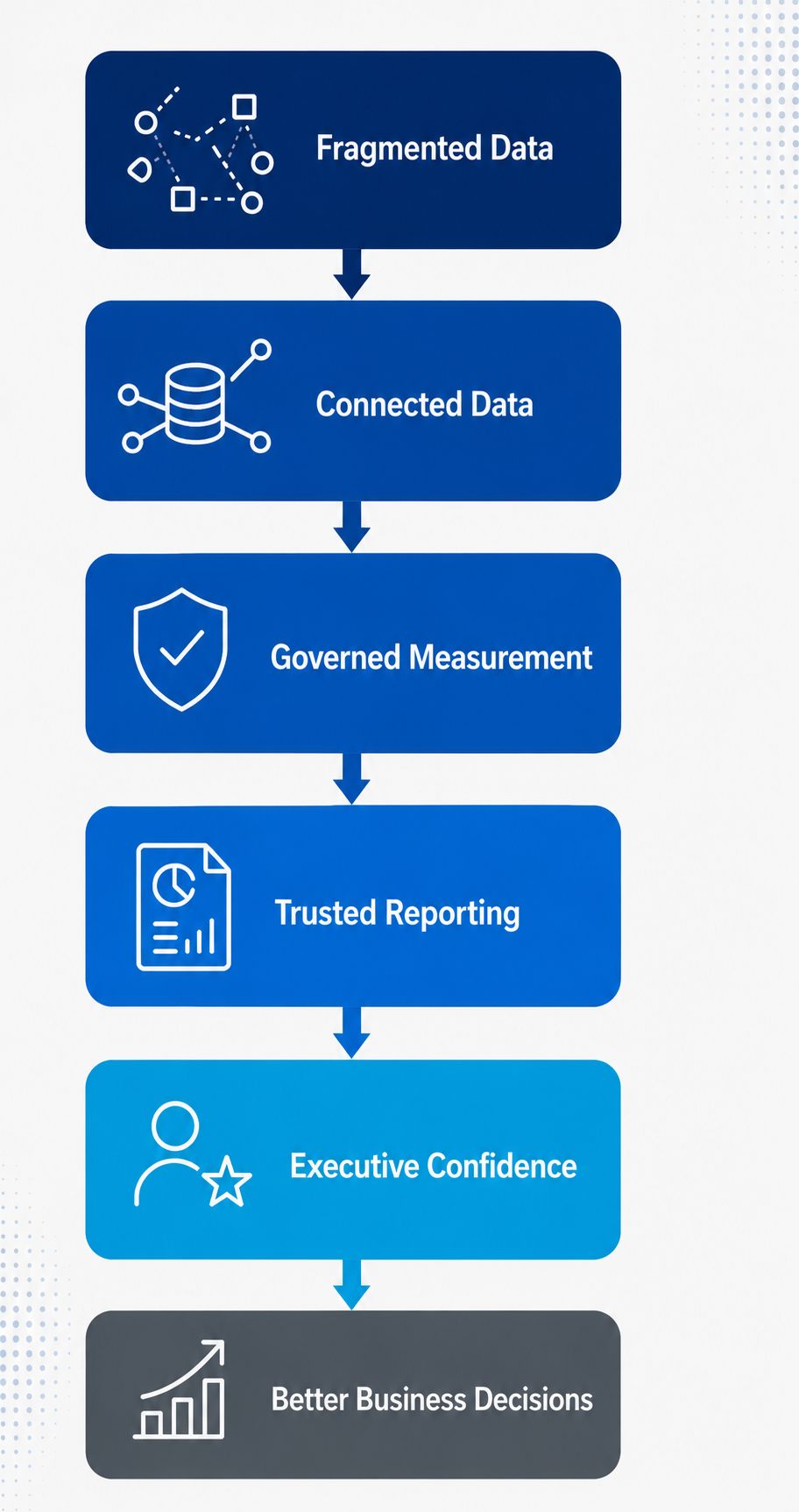
Organizations looking to improve executive confidence in marketing analytics should begin by asking four simple questions:
Answering these questions often reveals opportunities that no dashboard alone can identify.
Enterprise analytics isn’t about collecting more data or building more dashboards. It’s about enabling better business decisions. For marketing leaders, that means confidently connecting campaign performance, customer behavior, attribution, and business outcomes. When every dashboard tells a different story, the issue may not be the dashboard, but the maturity of the ecosystem behind it.

This article combines Devrun's experience assessing enterprise analytics environments with industry best practices from Adobe Experience League, Gartner, and Forrester.

🔗 Sources:
Adobe Experience League.
Gartner
Forrester
The Future of Marketing Measurement